


Cloud-Native Security Operation Center
- Microsoft Sentinel
- Defender for Endpoint
- Defender for Server
- Defender for Office 365
- Defender for Identity
- Defender for Cloud Apps
- Microsoft Entra ID Protection

Microsoft
Sentinel
Microsoft
Defender XDR
Third-Party
Logs
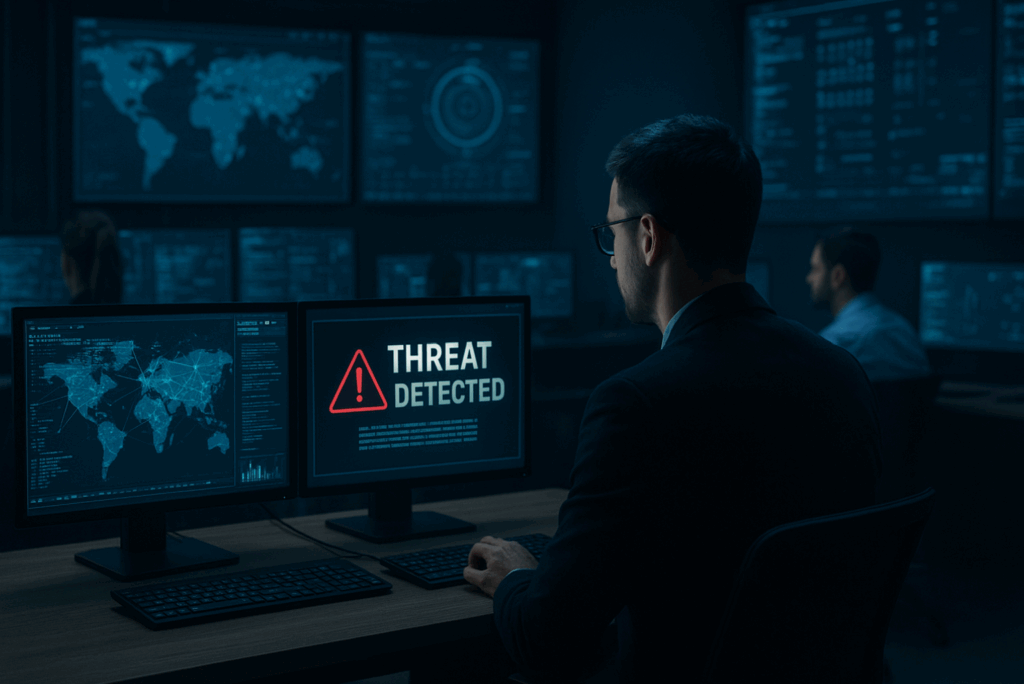
Our SOC combines continuous monitoring, alert triage, threat detection, incident handling, and ongoing tuning of the security platform. In practice, this means we collect relevant telemetry from your environment, correlate events in Microsoft Sentinel, prioritize the alerts that matter, and guide or execute containment actions based on agreed playbooks. The goal is not just to generate alerts, but to help you act on them quickly and consistently.
Data remains under your control. We design the SOC so that telemetry, retention, and access rights align with your legal, contractual, and internal compliance requirements. Because the service is built around Microsoft’s cloud security stack and your own tenant, you keep transparency over where data is processed, who can access it, and how actions are logged. This is especially important for regulated organizations that need auditability and clear governance.
We can operate as a fully managed SOC or as an extension of your internal IT or security team. At the start, we define roles, escalation paths, severity levels, and who is responsible for which response actions. That avoids confusion during live incidents and makes sure the service fits your internal capabilities instead of forcing you into a rigid operating model.
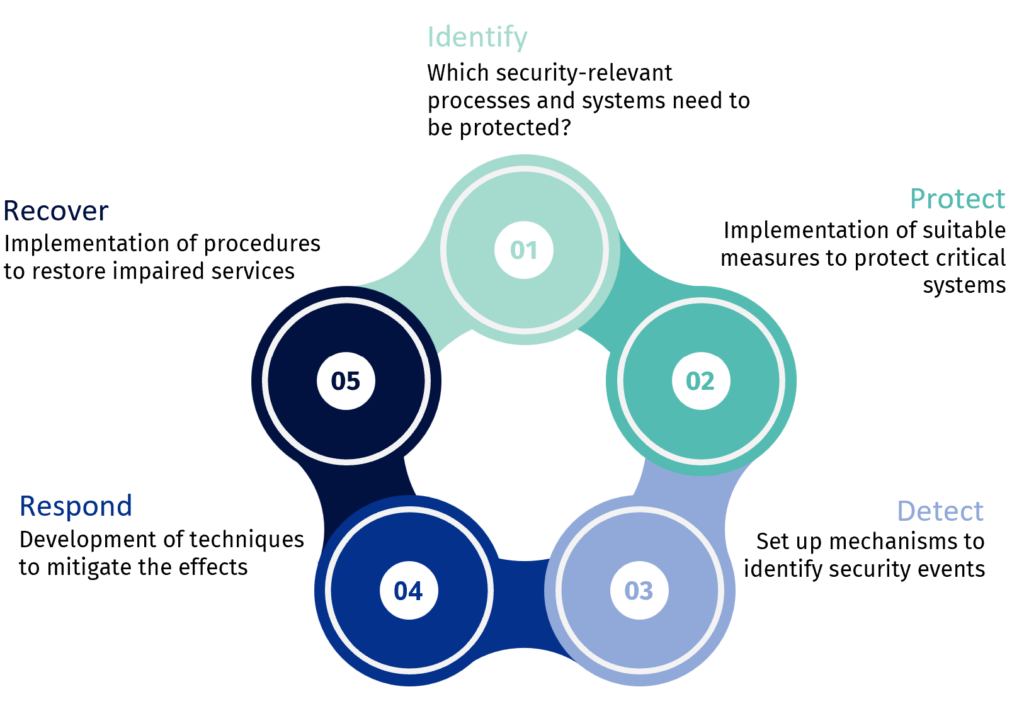
We start with the systems that give the highest security value first, typically identity, endpoints, email, cloud workloads, and critical infrastructure logs. From there, we expand in phases to include additional cloud services, SaaS platforms, on-premises systems, and selected legacy sources. This roadmap approach speeds up time to value and avoids turning onboarding into a long, expensive integration project.
We begin with a joint scoping phase: business priorities, critical assets, compliance requirements, and the most important attack scenarios. Then we connect prioritized log sources, configure use cases and alert rules, validate escalation workflows, and move into monitored operations. Once live, the service is continuously tuned through regular reviews, new detections, and lessons learned from incidents and false positives.
Security concept